Slip and Fall Injury Lawyer in Michigan
A fall can turn your week upside down with pain, doctor visits, and missed work. So, if you are looking for a Slip and Fall Injury Lawyer in Michigan, focus on two things first: get medical care and save evidence before it changes. These cases often fall under premises liability, which means the condition of the property matters.
If you were hurt in a slip and fall accident on someone else’s property in Michigan, then please call us today at 1-866-MICH-LAW. We work on a no-win, no-fee agreement, and our lawyers are specialists in helping people in Michigan claim slip and fall injury compensation.
Key Takeaways
- Get checked by a medical professional and make sure symptoms are documented.
- Photograph the hazard and the surrounding area before it changes.
- Ask for an incident report and identify cameras that may have recorded the fall.
- Many cases turn on “notice” (how long the hazard existed and what the owner did).
- Deadlines can vary, especially on public property, so it helps to act quickly.
Michigan Fall Injury Statistics
Falls are not a minor risk, and Michigan’s own data shows the scale better than national figures do. These numbers come from Michigan sources rather than general estimates.
- 1,367 older Michigan adults died from a fall injury in 2021, a rate of 86 per 100,000, according to the Michigan Falls Prevention Coalition.
- 17,813 fall-related hospitalizations occurred in Michigan that same year (Michigan Falls Prevention Coalition).
- 26.7 percent of Michigan adults age 65 and older reported a fall in the past year, per America’s Health Rankings (2023 data).
- Michigan’s Department of Health and Human Services identifies falls as a leading cause of injury death and loss of independence for older residents in its falls factsheet.
- Michigan’s 26.7 percent fall rate sits close to the national figure of 27.8 percent, so this is a widespread problem here and everywhere, not a local outlier (America’s Health Rankings, 2023).
An honest word about these figures: they focus on older adults, and they count falls of every kind, not just falls on someone else’s property. They don’t tell you what your own claim is worth. What they do show is that serious fall injuries are common in Michigan and carry real medical and financial weight, which is the backdrop against which a property owner’s failure to clear a hazard should be judged.
What If You Slipped and Fell Outside an Amazon Facility in Michigan?
Amazon warehouses and delivery stations run around the clock, and many workers arrive or leave during overnight and pre-dawn shifts. That means crossing large, poorly lit parking lots and dock aprons in exactly the conditions where black ice forms and goes unseen. If you fell outside the building, the question of who was responsible for that surface is often the whole case.
The hazards that put people down are usually outside the four walls: the parking lot itself, the stretch of walkway between the lot and the badge-in door, the trailer yards, the dock aprons where surfaces meet and refreeze, the areas around the guard shack, and unlit curb cuts that disappear in the dark. Michigan has a heavy concentration of these facilities, from the Metro Detroit area near Livonia, Romulus, Shelby Township, Pontiac, and Detroit to the Grand Rapids and Lansing regions, so these falls happen across the state. A fall on ice or snow in one of these zones can leave no visible hazard within hours, which is why what you do next matters.
What should you do after a slip and fall in Michigan?
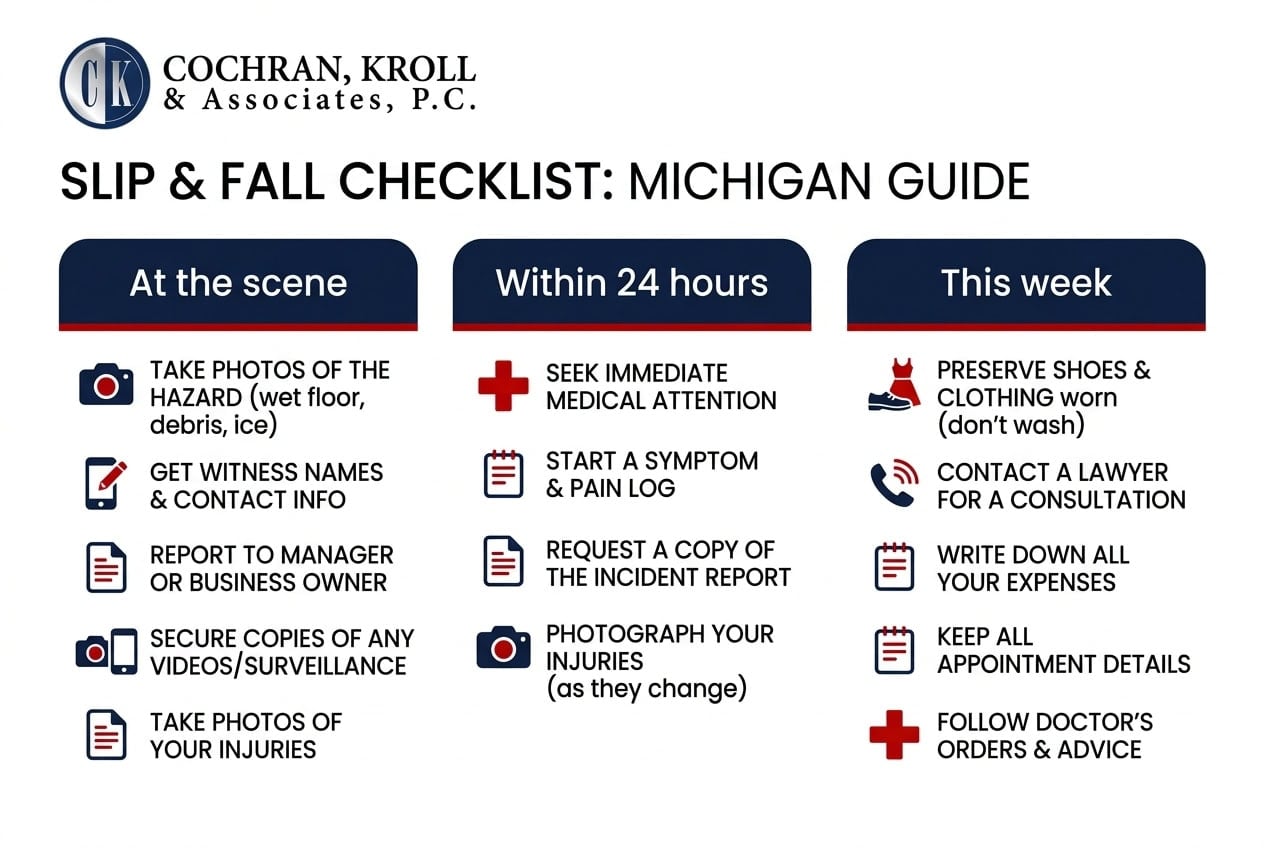
What should you do at the scene?
- If you can, take photos and video from multiple angles (including lighting, mats, signage, and the wider area).
- Get names and contact details for anyone who saw the fall or saw the hazard before you fell.
- Report the incident to a manager, property owner, or security and ask for an incident report.
Quick note: Video can be overwritten fast. If you see cameras, write down where they are and who you spoke with.
Simple script you can use (keep it polite):
“I’m requesting that any camera footage showing the area and the time of my fall be preserved. Please confirm who I should follow up with to make sure it’s not deleted.”
What should you do within 24 hours?
- Get medical care as soon as you can, even if you think you will “walk it off.” Some symptoms show up later.
- Tell the provider how you fell and what hit the ground (head, shoulder, hip, etc.). It helps your records stay accurate.
What should you do within the first week?
- Save the shoes and clothing you were wearing (do not wash them yet).
- Keep a short symptom log (pain, dizziness, sleep, mobility limits).
- Request a copy of the incident report, if available.
- Write down what you remember while it is fresh: time, weather, lighting, and what you noticed about the condition.
Do you have a slip and fall case in Michigan?
Most cases come down to proof. Not just the fall itself. You need a clear picture of the hazard, what the property did about it, and how your injuries were documented.
What are the four basics you need to show (in plain language)?
Think of most claims as four building blocks:
- The property owner or manager had a responsibility to keep the area reasonably safe.
- A dangerous condition existed (spill, broken step, ice patch, poor lighting, or a similar hazard).
- The condition caused the fall.
- The fall caused measurable harm (treatment, missed work, limits in daily life).
Does your visitor status change what the property owner owes you?
It can. Expectations may differ depending on why you were there.
- A customer or tenant usually has a clear reason for being on the property.
- A social guest may be treated differently from a paying customer.
- An unauthorized visitor may face extra hurdles.
The condition still matters either way. So does what the property did (or did not do) to fix it or warn people.
What does “knew or should have known” mean in evidence terms?
This is often the key issue. Useful proof can include:
- How long the hazard was present (or whether it built up over time)
- Inspection, cleaning, or maintenance routines
- Prior complaints or prior incidents
- Employee notes, logs, or reports
- Video showing the area before the fall
How Do You Build a Strong Slip and Fall Case in Michigan?
A strong slip-and-fall case is built on evidence, gathered early, before the property changes and before memories fade. The most useful way to think about it is not what the evidence is, but what each piece proves.
What Evidence Makes Your Case Stronger?
Proves the hazard existed:
- Photos and video of the hazard from several angles, the incident report, and weather records for the date and time
Proves the owner had notice:
- Prior complaints, inspection and cleaning logs, maintenance and repair records, and any earlier incidents at the same spot
Proves the fall caused the injury:
- Consistent medical records from the first visit forward, imaging, and work-restriction notes
Proves who was responsible:
- Who owned the property versus who maintained the area, plus any contract covering snow removal or cleaning
Much of this can still be obtained through records requests and preservation letters if a claim starts early enough. For more on how these claims work, see our Michigan slip and fall page.
What does Michigan’s recent slip-and-fall law update mean for real hazards?
Michigan courts have recently shifted how they analyze some “open and obvious” hazards. In plain terms: visibility is not the only issue. The condition, the setting, and what the property did about it still matter.
What changed (high-level, non-technical)?
Instead of treating “open and obvious” as an automatic end to a case, courts may focus more on the full situation. Proof tends to decide the outcome.
How does it affect common hazards like wet floors, uneven pavement, obstacles, and winter conditions?
A few examples of what people look at:
- Wet floors: Was there a warning sign? Was the area being cleaned? Do cameras show how long it stayed wet?
- Uneven pavement or drop-offs: Is it a long-standing defect? Are there prior complaints or repair records?
- Obstacles in walkways: Was the path reasonably clear? Was the lighting poor?
- Snow and ice: Was the area treated? Did the condition stick around? Was the entryway tracked-in and unmanaged?
How can comparative fault still reduce a claim?
Your actions can still matter. So can the setting. Lighting, signage, crowding, footwear, and how avoidable the hazard was can all become part of the dispute.
Where do serious slip and fall accidents happen most often in Michigan?
Winter hazards (ice, snow, tracked-in water)
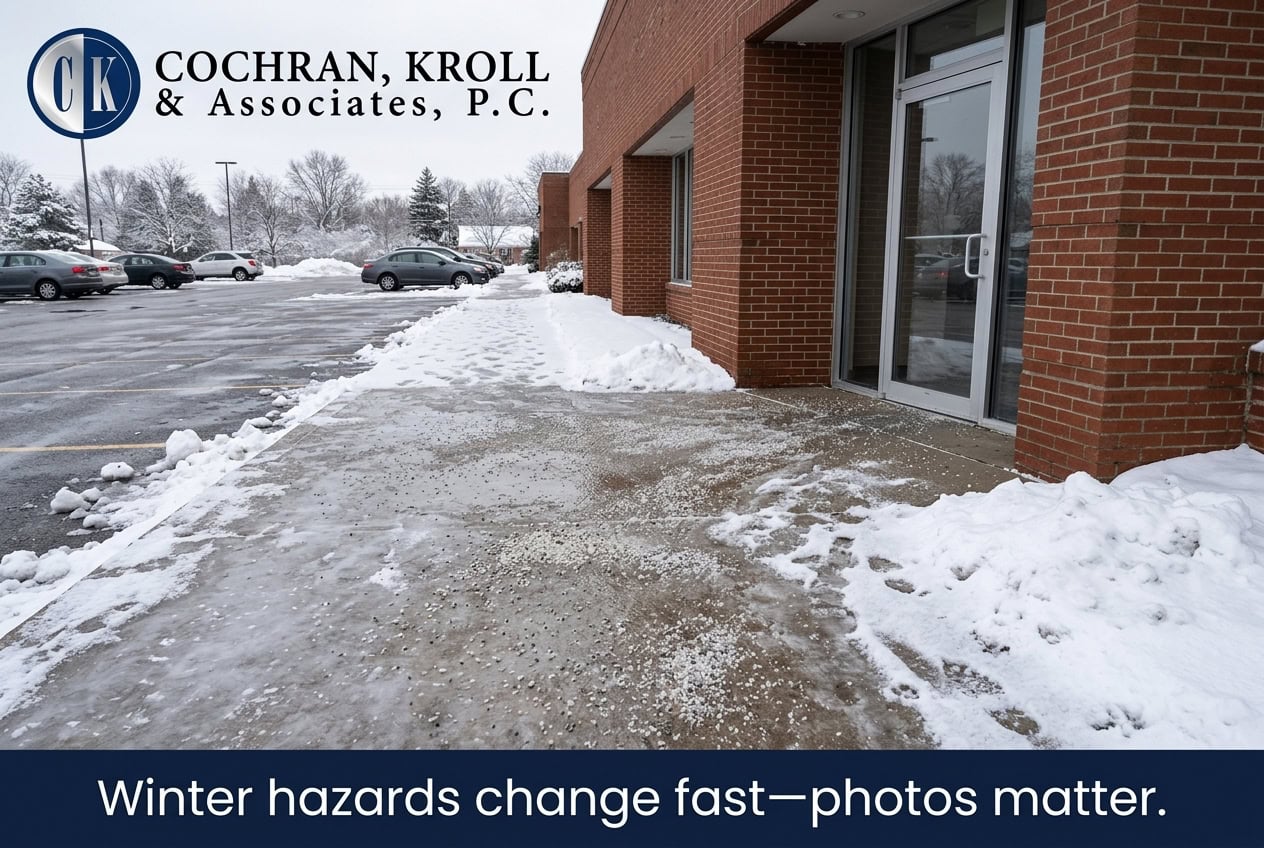
Common issues include untreated ice, patchy black ice, tracked-in water at entrances, and poorly maintained parking lots. Conditions can change quickly. Photos taken early can help.
Stores, restaurants, and retail
Look for spills, recently mopped floors, missing signs, cluttered aisles, uneven floor transitions, and poor lighting.
Apartments, rentals, and common areas
Falls often happen in shared spaces like entrances, hallways, stairwells, laundry rooms, and parking areas. Responsibility can depend on who controls and maintains the area.
Sidewalks, parking lots, and garages
Common hazards include cracks, potholes, drop-offs, broken curbs, drainage issues, and lighting problems.
Stairs, escalators, and handrails
Loose handrails, worn stair edges, uneven steps, and mechanical issues can cause serious falls, especially when surfaces are wet or lighting is poor.
What injuries and documentation matter most after a fall?
Why head injuries can be missed at first
Some people feel “fine” and crash later. If you notice headache, dizziness, nausea, confusion, vision changes, or sleep disruption, get evaluated and make sure it is documented.
Fractures, joint injuries, and mobility limits
Wrist, ankle, hip, and shoulder injuries are common. Imaging, specialist follow-ups, and therapy notes can help show the full impact.
Back/neck symptoms and treatment records
Back and neck pain can build over days. Follow-up care and work restriction notes can matter.
What to save (a practical evidence list)
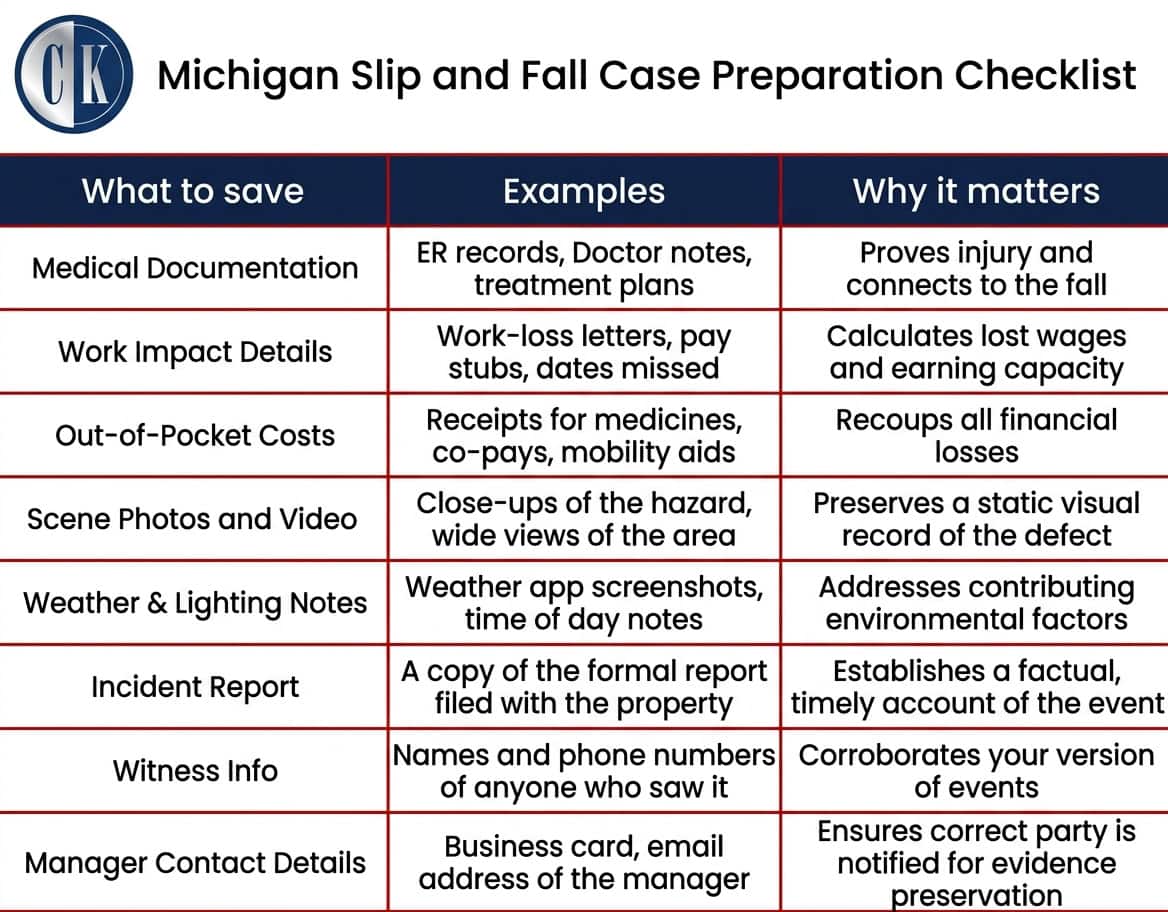
| What to save |
Examples |
Why it matters |
| Medical documentation |
ER/urgent care records, imaging, follow-ups |
Connects the fall to the injury |
| Work impact |
Work notes, restrictions, missed time records |
Shows real-life impact |
| Out-of-pocket costs |
Prescriptions, braces, transportation |
Helps document losses |
| The scene |
Photos/video, weather notes, lighting notes |
Preserves what changes quickly |
| Reports and contacts |
Incident report, witness info, manager name |
Helps confirm the event and timing |
What compensation can be available in a Michigan slip and fall claim?
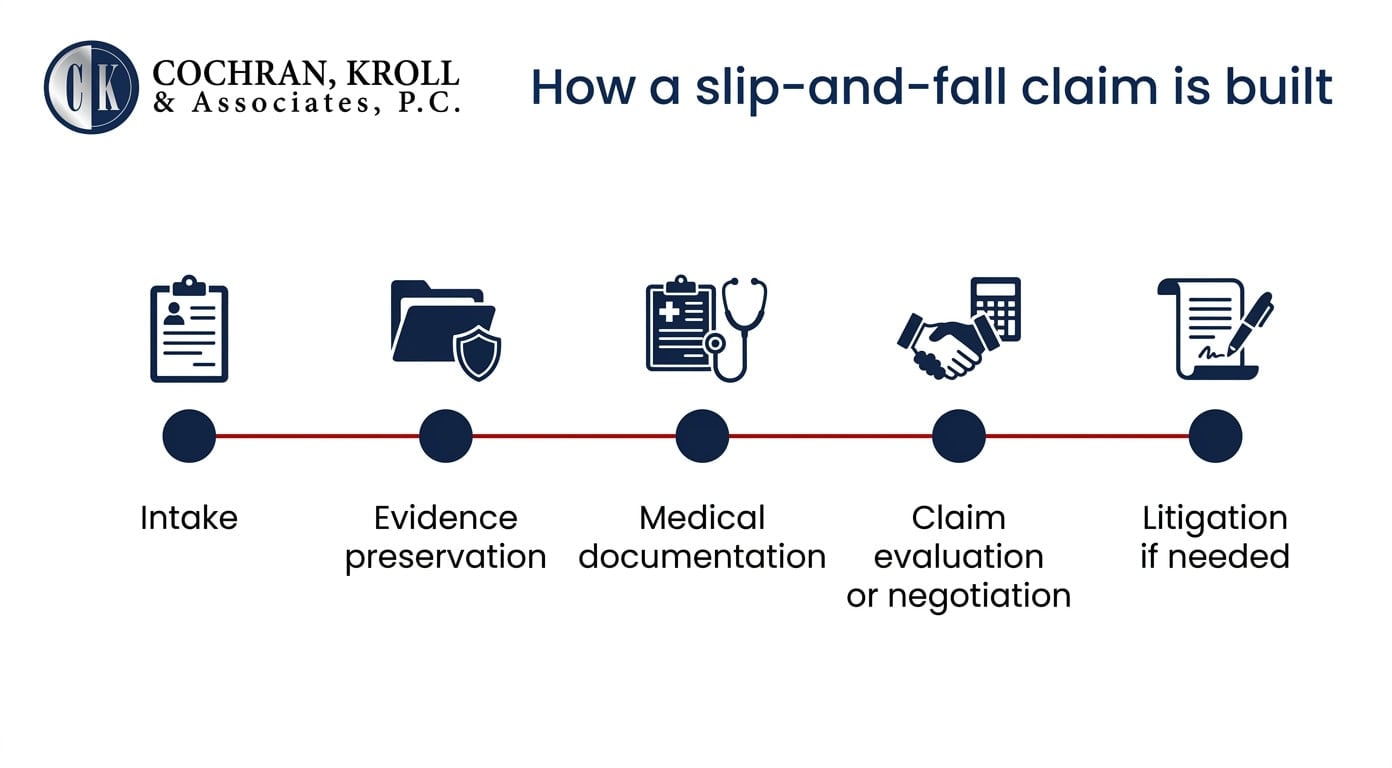
Each case depends on its facts, but claims often focus on two areas.
Economic losses
These can include medical expenses, future treatment needs, lost wages, and reduced earning ability.
Non-economic losses
These can include pain, activity limits, and the day-to-day impact on your quality of life.
What tends to change the case value?
Liability clarity, injury severity, consistency of medical documentation, fault disputes, and how complex ownership and insurance issues are can all change the picture.
What deadlines and special rules matter on public property?
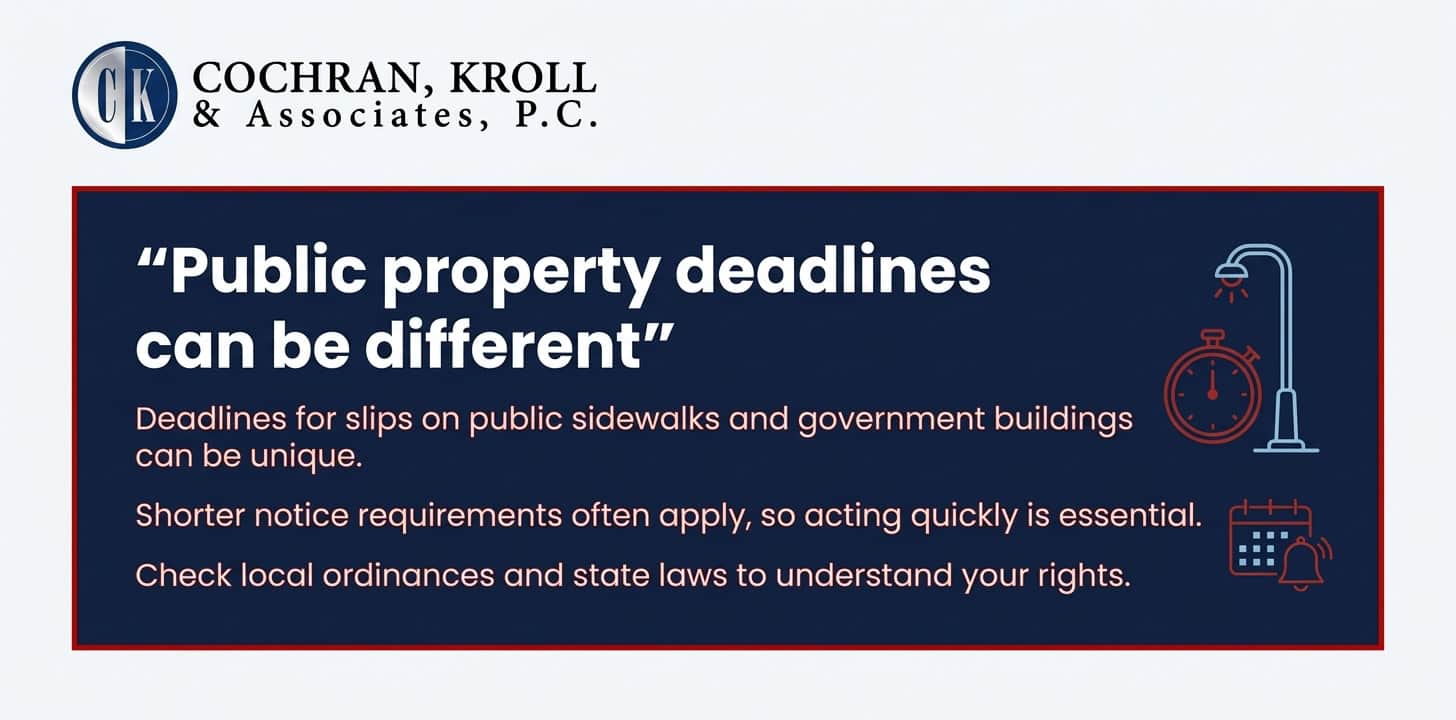
Warning: Deadlines and notice requirements can vary based on who you are claiming against and where the fall happened. Public property cases can involve extra rules and shorter time requirements.
If an insurance adjuster contacts you early, keep it simple:
- Share basic facts (time, place, what happened).
- Do not guess about fault.
- Do not downplay symptoms if you are still being evaluated.
What Is Needed to Make a Strong Slip and Fall Case?
A slip and fall on its own does not create a valid personal injury claim. A strong Michigan case needs evidence on four points: what caused the fall, who was responsible for that condition, whether they knew or should have known about it, and how the fall caused your injury.
Timing decides how much of that evidence survives. Spills get mopped, ice melts, broken steps get repaired, and surveillance footage is often overwritten within days. The proof below is easiest to gather in the first week and hardest to reconstruct after that.
- Proof of the dangerous condition. Dated photos and video of the hazard itself from several angles, taken before the area is cleaned, salted, or repaired.
- Evidence the owner knew or should have known. Inspection logs, cleaning schedules, maintenance work orders, prior complaints, and anything showing how long the condition had been there.
- Evidence connecting the hazard to your fall. Your own account recorded while it is fresh, the incident report, and footage that shows the fall rather than only the aftermath.
- Medical evidence of your injuries. Records from the first visit onward that state how you fell and which parts of your body took the impact.
- Witnesses and surveillance footage. Names and phone numbers collected at the scene, plus a written request to whoever controls the cameras asking that the footage be preserved.
- Documentation of your financial losses. Bills, prescriptions, mileage to appointments, missed-work records, and any written restrictions from your provider.
- Evidence of the property owner’s responsibility. Who owned, leased, or maintained the specific area, which in shopping centers, apartment complexes, and parking structures is often not the business you walked into.
Few people gather all seven on their own, and gaps can usually still be filled through records requests and formal preservation letters if the claim is started early enough. Winter cases move fastest of all, because a fall on ice or snow can leave no visible hazard within hours.
How do Cochran slip and fall lawyers build a strong Michigan case?
Cochran Law represents individuals and families in serious injury matters, including premises claims.
Investigation and evidence preservation
This may include identifying responsible parties, preserving video, gathering witness statements, and documenting the condition before it changes.
Proving notice and unreasonable risk
Many cases turn on whether the property had a fair chance to fix the problem or warn visitors. Maintenance routines, incident records, and footage can help show what the property knew or should have known.
Negotiation and litigation posture
A claim may involve an insurance contract, case evaluation, and negotiation. If needed, a lawsuit may be filed to keep the process moving.
To learn more about the firm, visit Cochran, Kroll & Associates, P.C., or explore the broader Michigan personal injury practice.
How much does a slip and fall lawyer cost?
Cochran Law states that it handles many injury matters on a contingency fee basis, meaning attorney fees are typically tied to recovery. Ask how case costs (like records or filing fees) are handled in your situation.
If you want to talk through what happened, call 1-866-MICH-LAW for a free case evaluation, or send an online case evaluation request.
Why people choose Cochran Law for Michigan injury cases
People usually want three things: quick access, clear answers, and steady communication. Cochran Law highlights:
Contact Our Slip and Fall Injury Lawyer in Michigan
Slip and fall cases often come down to evidence: what caused the hazard, how long it existed, and what the property owner knew (or should have known). A consultation can help you understand what documentation to preserve.
Contact us at Cochran, Kroll & Associates, P.C. for a free consultation. We’ll review your case, explain your options, and map out the strongest path forward. Remember, we don’t get paid unless you win.
Call us at 1-866-MICH-LAW anytime, 24/7, to schedule a free case evaluation.
FAQs about slip and fall accidents in Michigan
Are slip and fall cases hard to win?
They can be tough because proof matters. You usually need to show what the hazard was, whether the owner had notice, and how clearly the fall caused your injuries. Photos, video, witness details, and medical records can help make the story clear.
What should I avoid saying to an insurance adjuster after a slip and fall?
Avoid guessing, downplaying symptoms, or agreeing to a recorded statement before you understand your situation. Stick to basic facts (time, place, what happened). Avoid opinions about fault or medical conclusions.
How long do I have to file a slip and fall lawsuit in Michigan?
Deadlines can vary based on the type of claim and who the defendant is. Public property cases may involve shorter notice requirements. A lawyer can help identify the right deadline for your specific situation.
How much are most slip and fall settlements?
There is no single typical amount. Value depends on liability proof, the seriousness of the injury, treatment and recovery, time missed from work, and how disputed the facts are. Be cautious with anyone who suggests a number without reviewing the details.
What is the fall law in Michigan?
Slip and fall cases usually fall under Michigan premises liability rules. Many disputes center on notice (what the owner knew or should have known), warnings and maintenance, and whether the hazard created an unreasonable risk. The facts of the location and the condition often drive the outcome.
What if I slipped on ice or snow in Michigan?
Winter cases often focus on what the condition was, whether it was addressed reasonably, and what the property knew or should have known. Take photos early, note the area and lighting, and identify any cameras or witnesses.
What evidence helps a slip and fall lawyer evaluate a case?
Helpful items include photos or videos of the hazard, witness names, an incident report, camera locations, your shoes and clothing, and medical records that connect the fall to your injuries.
What if I was partly at fault, or not paying attention?
Fault can still matter in Michigan premises cases. Even if you think you share some responsibility, the details may change the analysis, including lighting, warnings, crowding, and how the area was maintained.
What if the fall happened on a sidewalk or public property?
Public property cases can involve extra rules and shorter time requirements. Identifying who maintains the area and preserving evidence quickly are early priorities.
How much does a slip and fall lawyer cost?
Cochran Law states that it handles many injury matters on a contingency fee basis, meaning attorney fees are typically tied to recovery. Case costs can be handled differently, so ask how costs are managed in your situation.